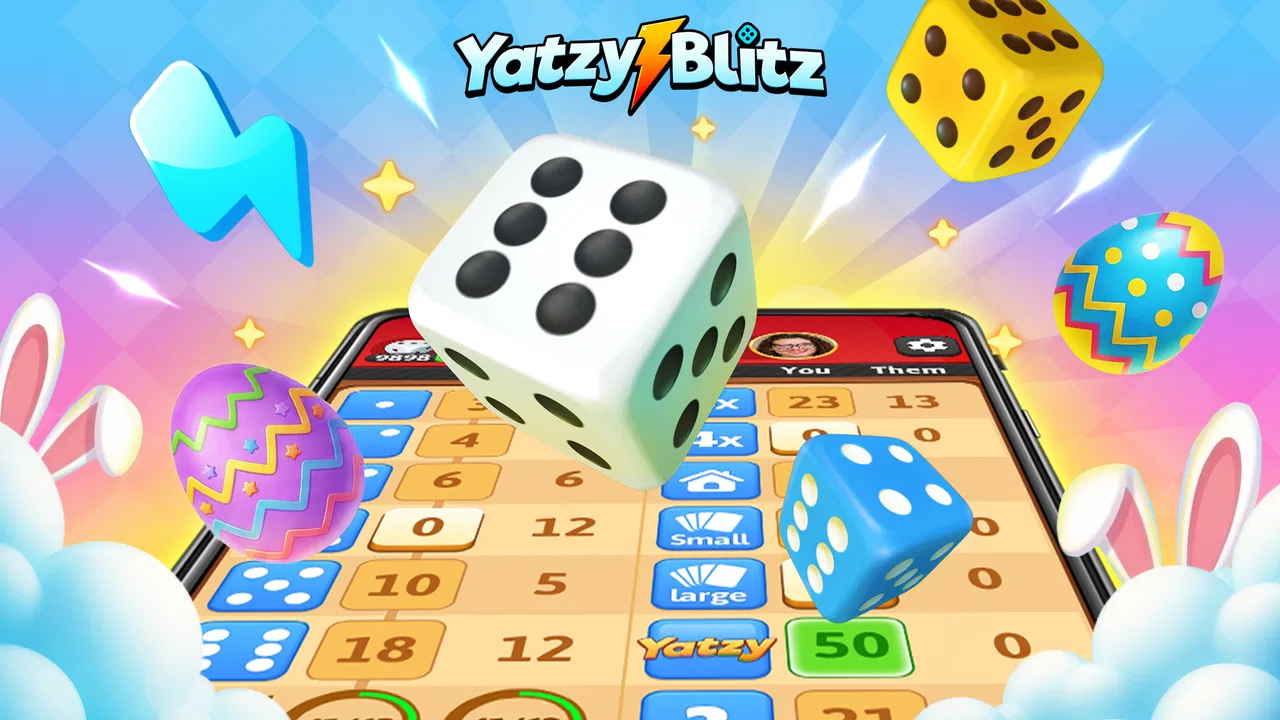
Yatzy Blitz: Classic Dice Game
- 4.7
- Rating
- 1.00M
- Installs
- Free
- Price
 Analysis by App-foxy
I picked up Yatzy Blitz: Classic Dice Game expecting a familiar dice pastime, and that is exactly where its appeal begins. You roll, decide which dice are worth keeping, roll again, and try to build the best possible combination before the score sheet runs out of useful choices. The rules are easy to understand, but the small decisions between rolls give the game enough tension to make a quick break feel surprisingly engaging.
This is a free board game from Unicorn Board Games, available for players rated Everyone and compatible with Android 7.0 or later. It has reached over a million installs and holds a 4.7 average from around 84 thousand ratings, which fits my impression of a game designed for immediate access rather than a long tutorial or complicated setup. The current version is 1.0.58, and optional in-app purchases range from $0.99 to $99.99 per item.
Why the first roll is more interesting than it looks
The first action is simple: tap to roll the dice. The important part comes immediately afterward, when I have to judge whether the result is promising enough to protect. Keeping a pair may be sensible if I am chasing a three-of-a-kind, but it can also close off a better route such as a sequence or a full house. That decision gives each turn a small fork in the road instead of making the game a completely passive dice simulator.
You May Also Like

 Blood Strike: 2.5 Anniversary
Blood Strike’s Loadouts Turn Every Drop Into a Tactical Gamble
A close look at Blood Strike’s custom loadouts: how fast access to signature weapons reshapes its battle royale rhythm, rewards preparation, and narrows the gap between fights.

 Pandora - Music & Podcasts
Pandora’s Music Is Easy to Start, but Harder to Recover
Pandora’s strength is its low-effort path from a seed to a station. Its weak spot is how much confidence it asks you to place in connection, setup, and quiet recovery.

 8 Ball Pool
 Is Built on Rivalries, Rematches, and Routine
A close look at the rivalries, rematches, shared routines, and unanswered safety questions that turn a quick pool match into a persistent mobile community.

 Samsung Music
’s Quiet Strength Is Playing What You Already Own
Its reach comes less from spectacle than from dependable access to a personal library. That simplicity is both the app’s strongest retention engine and its ceiling.

 AccuWeather: Weather Radar
AccuWeather Review: A Quick, Clear Forecast for Everyday Decisions
For everyday plans, the best forecast is the one you can understand quickly. AccuWeather makes rain timing, radar, and local conditions easy to act on, with a few trade-offs.

 Hill Climb Racing
Why Hill Climb Racing Still Turns Crashes Into One More Run
A tiny car, a bumpy hill and one more upgrade: Hill Climb Racing keeps resurfacing because its simple chaos makes every near-miss feel personal.
More From Our News Desk



I like that the basic loop remains recognizable. There is no need to learn a large collection of special rules before playing. A player who already knows classic Yatzy can get moving quickly, while someone new can understand the objective through the visible relationship between the dice and the scoring choices. It is a good fit for a short first session because the game asks for attention without demanding a large time commitment before the fun starts.
The strongest early habit is to avoid treating every roll as a command to chase the most dramatic category. If the opening dice already point toward a reliable score, protecting that progress can be wiser than gambling for a rare result. I found the game more enjoyable once I stopped trying to make every turn spectacular and started treating each roll as a piece of a larger score-management puzzle.
That is also where the board-game character matters. Unlike a pure reflex game, Yatzy Blitz gives me time to examine the result and make a choice. Unlike a traditional physical set, it removes the need to find dice, paper, and a pencil. The convenience is the main reason I would keep it installed: it turns an old tabletop idea into something I can start while waiting for an appointment or taking a short break.
The feedback rhythm keeps each turn moving
The feedback arrives in a compact rhythm: roll, inspect, hold the useful dice, roll again, and then commit the turn to a category. Each step gives me a clear response to the previous decision. A promising pair makes the next roll feel hopeful; a scattered result forces a more defensive choice; a nearly completed combination creates the familiar temptation to risk what is already safe.
This rhythm is the real strength of the game. The individual rolls are random, but my reaction to them is not. I am constantly balancing probability against the categories still available on the score sheet. The result is a pleasant mixture of luck and judgment. A perfect plan can fail because of an unlucky roll, but a careless player can also waste a strong opening by chasing an unlikely outcome for too long.
One useful approach is to think about the score sheet before rolling again. If the categories that reward repeated numbers are still open, a pair or three matching dice may be valuable. If those options have already been used, the same roll may be better treated as the foundation for a sequence or another available combination. This small change in attention makes the game feel less like repeated tapping and more like managing limited opportunities.
I also recommend deciding what kind of mistake I am willing to accept. Sometimes the right move is not the one with the highest possible score, but the one that avoids destroying a workable turn. For example, holding several dice that already support a modest result can be sensible when the remaining categories are awkward. That is a subtle trade-off, and it gives experienced players more to consider than the short store summary suggests.
The interface is best judged by how quickly it lets me read the situation. A dice game needs the current roll, the dice I am keeping, and the available scoring choices to feel understandable at a glance. When that information is clear, the game works well as a casual companion. When I am tired or playing on a smaller screen, the number of choices can still make a turn feel more deliberate than the quick format initially promises.
Small rewards make ordinary rolls matter
The reward is not only the final score. It is also the immediate satisfaction of turning an ordinary roll into a better one. Holding the right dice and seeing the next roll complete a useful combination creates a clear payoff. Even when the result is not exceptional, filling a difficult category can feel like progress because it removes one more problem from the remaining turns.
That structure encourages me to play one more round. A disappointing turn does not necessarily end the session emotionally; it often makes me curious about whether the next game will produce a better opening. A strong turn has the opposite effect: I want to see whether I can repeat the decision-making rather than relying on luck. This is a well-balanced reason to continue because the motivation comes from the game loop itself, not from a long narrative or a complicated collection system.
For a casual player, the reward is the brief challenge of beating a previous result or simply finishing a round without making a poor sacrifice. For a more competitive player, the interest lies in improving risk assessment. I would not recommend it to someone looking for deep strategy in the style of a large board game, but I would recommend it to someone who enjoys small tactical choices with a random element.
There is also a useful social angle, even when the game is played alone. After a particularly good combination, I naturally want to show the result or compare it with someone who knows the classic format. The game is easy to explain in conversation because the core rules are familiar. That makes it a practical choice for families and mixed-age groups, especially when one person wants a game that does not require a long rules briefing.
The Everyone rating supports that broad accessibility, although accessibility should not be confused with guaranteed simplicity for every player. Younger players may understand rolling and matching quickly but still need help with the value of sacrificing one category to protect another. Adults who have played dice games before will probably grasp the choices immediately, while newcomers may need a few rounds before the score sheet stops feeling like a list of traps.
What happens when a session resets
The reset is an important part of the appeal. Once a round is complete, the previous outcome stops controlling the next game. A poor opening does not leave me trapped in a damaged campaign, and a strong result does not make the following session feel predetermined. I can start again with a clean set of decisions, which is exactly what I want from a game suited to short bursts.
A realistic use case is a ten-minute wait before leaving home. I can begin a round, make a few rolls, and decide whether to finish or return later when my attention is limited. The format also works after dinner when I want something more interactive than scrolling but less demanding than a strategy game. It is not the best choice for a long uninterrupted evening unless I genuinely enjoy repeating the same scoring loop, but it fits irregular free time very well.
The reset also makes experimentation less costly. I can try a more ambitious approach in one session, such as prioritizing a difficult combination, and then play conservatively in the next. Comparing how those approaches feel teaches me something about my own habits. I often discover that I overvalue a possible high score when a dependable category would have produced a better overall result.
That said, repetition is both the game’s comfort and its limitation. Players who need new boards, characters, stories, or changing objectives may find the reset too familiar after the novelty fades. The game’s identity is built around repeating a classic dice structure, so it should be chosen for the pleasure of that structure rather than for constant content variation.
The free entry point is convenient, but the presence of optional purchases is worth keeping in mind. I can approach the game as a no-cost casual download, yet players who are sensitive to spending prompts should check how the purchase elements fit their own habits. The listed purchase range extends from $0.99 to $99.99 per item, so I would be cautious about handing the device to a child without suitable purchase controls in place.
Where it stands beside familiar alternatives
Compared with physical Yatzy, this version wins on readiness. There is no need to gather equipment, write scores manually, or find a flat surface. The trade-off is that the tactile pleasure of shaking real dice is missing. If the physical ritual is the part I enjoy most, a real set remains more satisfying; if I mainly want quick access to the decisions, the mobile format is more practical.
Compared with broader board-game apps, this one is much narrower and easier to enter. It does not ask me to learn a long ruleset, manage a map, or wait through extended turns. That makes it a weaker substitute for players seeking variety and a stronger choice for someone who wants a focused game that can be understood in seconds. Its simplicity is deliberate, not a sign that it is trying to compete with a full digital board-game collection.
Compared with other casual dice games, the classic scoring structure gives Yatzy Blitz more lasting decision-making than a game based only on tapping for a random reward. I have to decide when to stop chasing a result and when to accept a smaller score. However, players who prefer direct action, fast visual effects, or a campaign with unlockable goals may find the measured pace less exciting.
The developer, Unicorn Board Games, has positioned the experience around a familiar board-game idea rather than an elaborate new system. That is a sensible choice for this audience. The game’s strength is not surprise; it is the clean return to a format many people already understand, with enough turn-by-turn judgment to keep the familiar rules from feeling completely automatic.
Who should play, and who should skip it
I would recommend it to people who like classic dice games, want a lightweight board-game option for Android, or need something that works in short sessions. It is also a good introduction for a player who finds larger board games intimidating. The free price makes trying it easy, and the Everyone rating makes it suitable for a broad household audience, provided adults remain aware of the optional purchase range.
I would be less enthusiastic about recommending it to someone who wants a persistent story, a large variety of modes, or a game where skill can completely overcome randomness. The dice will always have the final word on some turns. Good choices improve the position, but they cannot guarantee the result. That uncertainty is central to the appeal, so a player who dislikes luck-driven outcomes may become frustrated rather than entertained.
It may also be a poor fit for people who want a genuinely social experience built around live interaction. The classic format can lead to friendly comparisons, but the core enjoyment comes from managing my own turn. For a group gathering, a physical set or a multiplayer-focused board game may create more conversation and shared tension.
My verdict on the roll-and-reset loop
Yatzy Blitz works because every turn has a complete miniature arc. I take the first roll, read the possibilities, protect some dice, gamble with others, and receive immediate feedback from the next result. The reward is a useful combination or a smartly saved category. Then the score sheet closes, the round ends, and the reset gives me a fresh reason to try again.
My main advice is to play it as a decision game, not as a button-mashing dice roller. Before each reroll, ask which categories are still valuable and whether the dice already offer a safe result. That habit reveals the best part of the design: the tension between what I want and what the current roll realistically supports.
With a 4.7 average and more than a million installs, it has clearly found an audience for this compact style of board play. I can see why. It is free to start, easy to understand, and flexible enough for a short waiting-room session without pretending to be a deeper strategy experience than it is.
My final recommendation is simple: choose it when you want familiar dice decisions, quick resets, and a reason to play one more round. Skip it if you need extensive variety or dislike random outcomes. For everyone else, this is a polished little time-filler whose most enjoyable moments come from making one careful choice between rolls and discovering whether the dice reward that judgment.
FAQs for Yatzy Blitz: Classic Dice Game
01What is Yatzy Blitz: Classic Dice Game and how do I play it?
Yatzy Blitz is a digital version of the classic dice game, Yatzy, available on both Android and iOS. Players roll five dice up to three times per turn to achieve specific combinations, like straights or full houses, to score points. The goal is to outscore your opponent by making the best combinations possible.
02Is Yatzy Blitz free to download and play?
Yes, Yatzy Blitz is free to download on both Android and iOS platforms. However, the game offers in-app purchases and ads, which can enhance gameplay or provide additional features. You can choose to buy coins or remove ads, but these purchases are entirely optional.
03Does Yatzy Blitz offer multiplayer options?
Absolutely! Yatzy Blitz includes both single-player and multiplayer modes. You can play against the computer, compete with friends, or challenge random players online. This feature adds a social element to the game, allowing you to enjoy it with others or improve your skills in solo mode.
04Are there any special features in Yatzy Blitz?
Yatzy Blitz offers several special features, including daily challenges, tournaments, and customizable dice and boards. These features enhance the gaming experience by providing variety and opportunities for players to earn rewards and showcase their skills in different settings.
05What are the system requirements for Yatzy Blitz?
For Android users, Yatzy Blitz requires Android version 5.0 or higher. iOS users need a device running iOS 10.0 or later. The game is optimized for both smartphones and tablets, ensuring smooth gameplay across a wide range of devices. Ensure your device meets these requirements for the best experience.
Pros
- Quick and engaging gameplay sessions.
- Intuitive user interface for easy navigation.
- Variety of modes keeps it interesting.
- Offline play available for convenience.
- Frequent updates with new features.
Cons
- Ads can be intrusive at times.
- Limited customization options.
- Requires internet for multiplayer.
- Some in-app purchases are pricey.
- Occasional connectivity issues.

Yatzy Blitz: Classic Dice Game
Gallery